Inputs need identities.
The broker ingests satellite imagery and model fields alongside telemetry. Source and observation time matter as much as the visual result.
01Featured system Azimuth
Reality before rendering.
An evidence-aware physical-world runtime in development. Explore what exists, how it changes, and what an observer would actually perceive.
01 / One world, several readings
The image should follow the world. Azimuth’s direction is to keep the evidence, the supported state and the observer’s view distinct, so a change in appearance does not silently become a change in truth.
The image is an output. Camera, atmosphere and light shape what becomes visible.
Positions, surfaces and environmental fields belong to the world, independently of the view.
Observations, modeled fields and derivations need their own identity, time and limits.
A convincing image cannot substitute for a source or make an approximation into an observation.
02 / A world at an instant
In the working renderer, the sun, moon, stars and Earth’s rotation come from astronomical calculations. A date selects the sky; it is more than a position on an animation timeline.
Which time are we asking about?
Where are the bodies and light sources?
What would be visible from here?
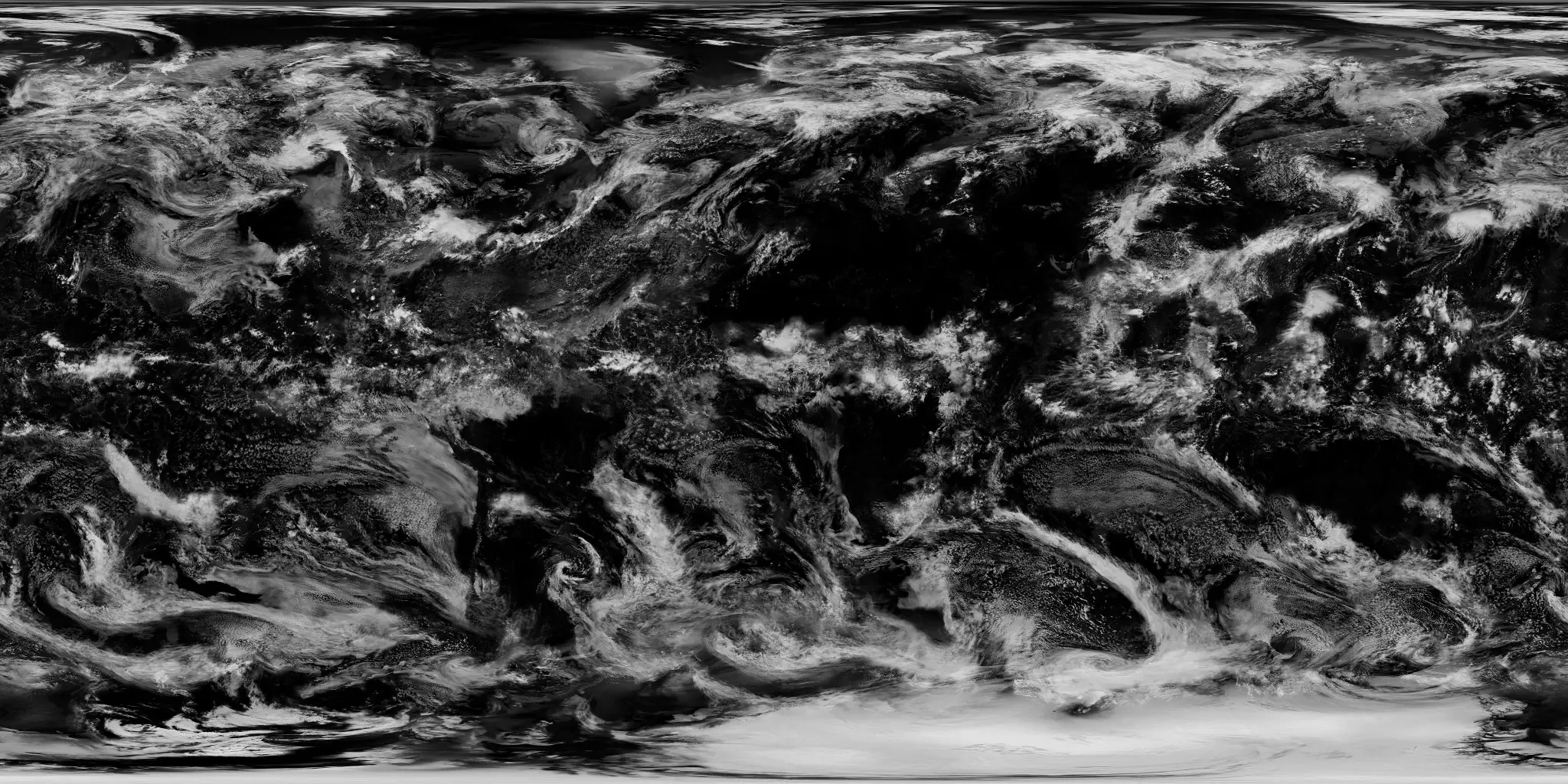
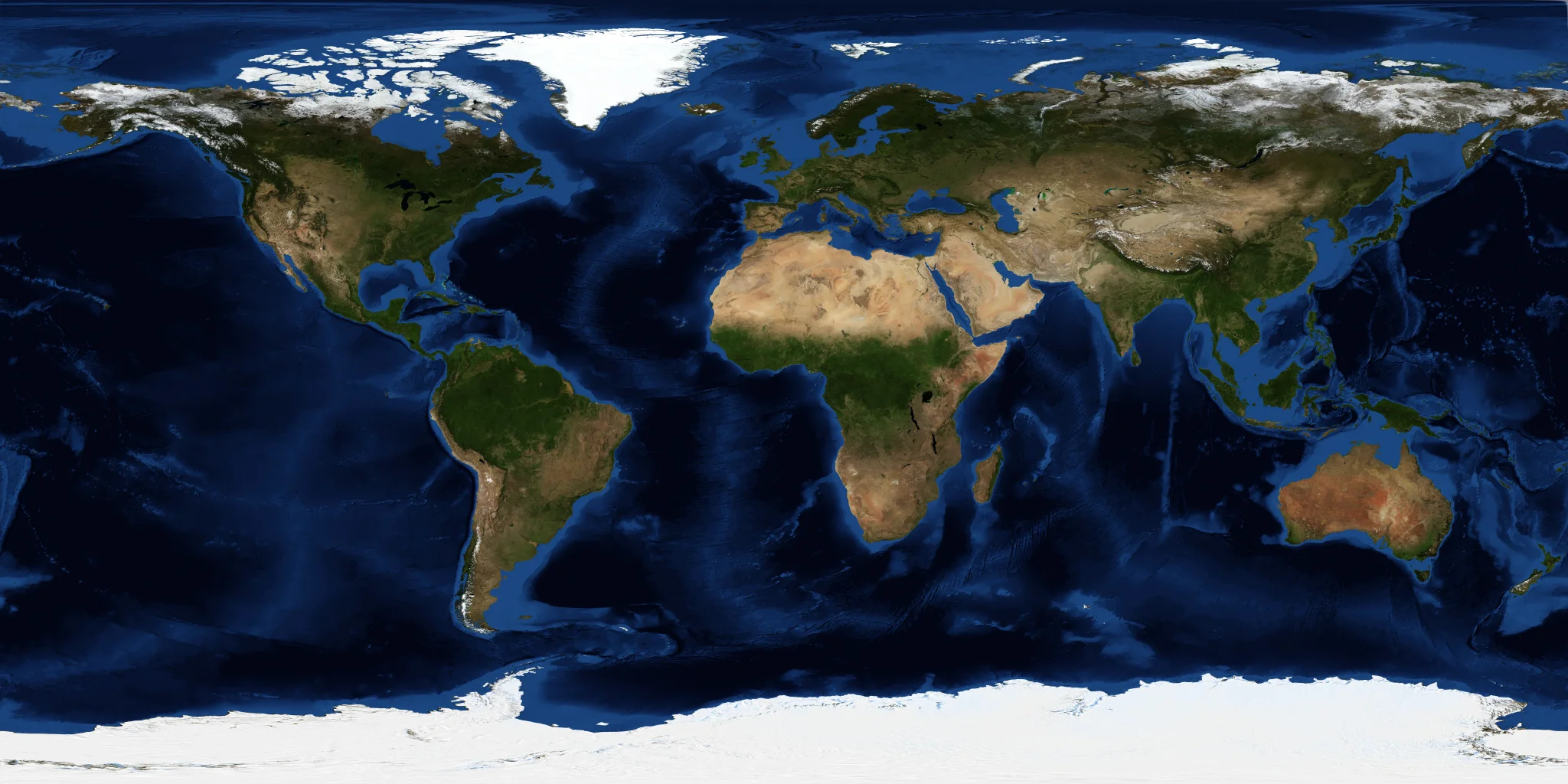
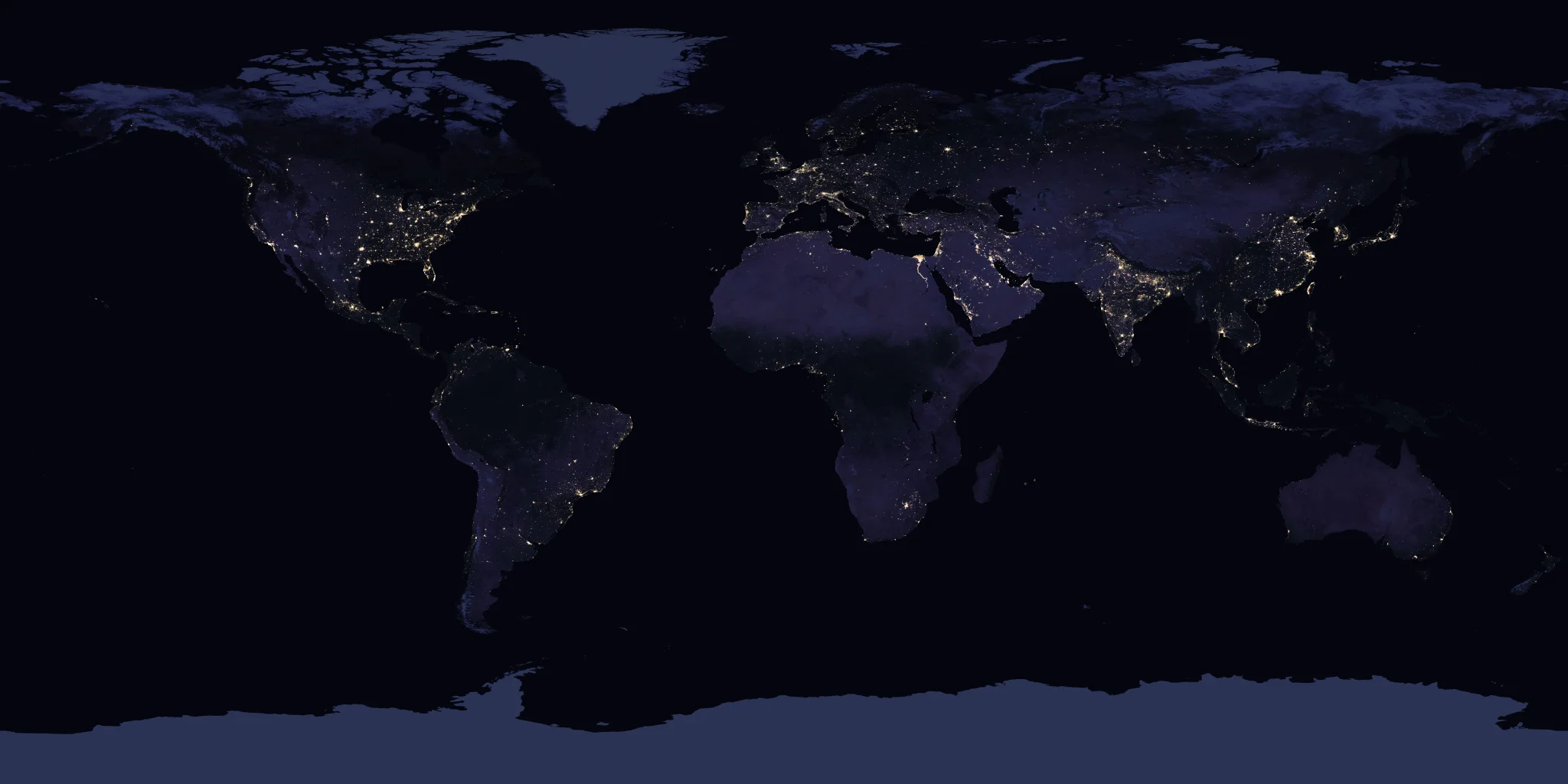
The rotating Earth above is an illustrative presentation using static imagery, with accelerated rotation and an art-directed light. It is not a live Azimuth session or a current weather observation.
03 / The larger ambition
The World Runtime architecture is intended to represent physical bodies across time, scale and viewpoint. Earth is the first and richest consumer; it is not meant to define the limits of the model.
Surface, atmosphere, illumination and orbital context.
Observations and modeled conditions with explicit times and sources.
The architecture aims to carry the same physical model into local environments.
Planetary-to-local continuity and generalized multi-body support describe the architecture’s direction. They are not claims that every body, scale or data source is implemented.
04 / Implementation and intent
A WebGL Earth renderer with astronomical sun, moon, stars and rotation; live and replayed flight telemetry; a Rust broker for observational and modeled Earth-system data; and an embedding surface for host applications.
Blue Skies is a host integration: camera and shot direction are separate from the world’s underlying state.
An evidence-aware, temporally addressable World Runtime. The aim is to reconstruct and represent physical reality while preserving the difference between an observation, a derivation, a simulation and a picture.
A broader architecture is useful only when its implementation can carry those distinctions all the way to the observer.
The broker ingests satellite imagery and model fields alongside telemetry. Source and observation time matter as much as the visual result.
Observed, derived, reconstructed, approximated, simulated and rendered information should not quietly collapse into a single kind of fact.
Interpolation and bounded computation can happen in the client. Running locally does not make a result authoritative world state.
The architecture calls for a visible result to remain connected to the evidence and assumptions that support it, including what is still uncertain.
Presentation imagery: NASA Blue Marble and Black Marble surface maps, with a static cloud map from Azimuth. This page is a project account and visual study, not a scientific instrument.